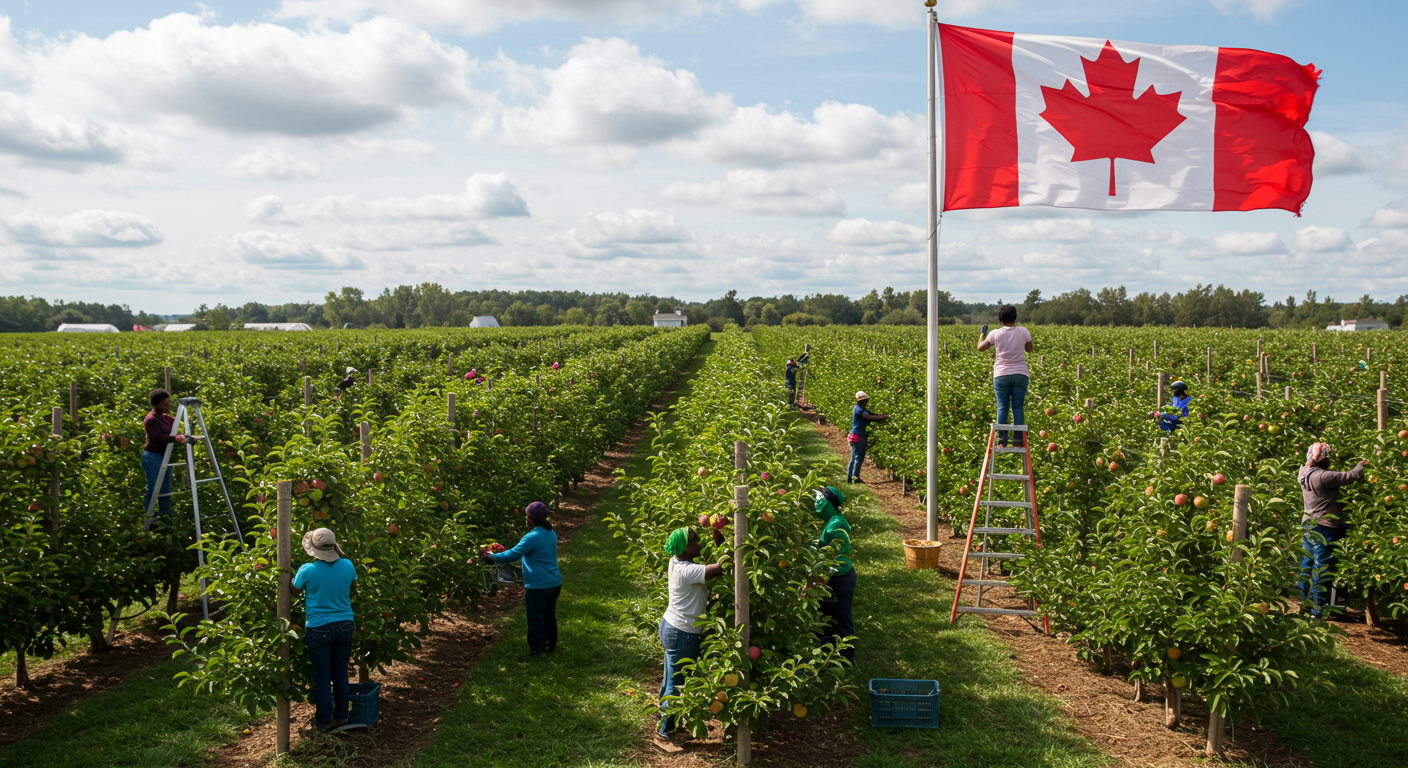
If you’ve been searching for immigration lawyer assistance to navigate work visa applications or dreaming of securing employment visa services that won’t drain your savings, Canada’s agricultural sector might be your golden ticket.
High-paying farm jobs in Canada with free visa sponsorship are now open to international workers seeking legal employment and permanent residency opportunities.
These positions offer something that’s increasingly rare in today’s competitive immigration landscape: employers who genuinely want to sponsor foreign workers and will cover the full cost of your work permit, from the labor certification process right through to your arrival in Canada.
What makes these $50,000 agricultural jobs in Canada even more compelling is that they don’t require you to hire expensive visa attorneys near me or navigate complex H1B visa sponsorship lotteries. Instead, Canadian employers offering green card application pathways through programs like the Seasonal Agricultural Worker Program (SAWP) handle the entire visa sponsorship process themselves.
Whether you’re a skilled worker visa candidate with years of experience or someone with zero farming background, these opportunities provide competitive salaries, free work visa sponsorship, comprehensive relocation support, and a legitimate pathway to Canadian permanent residency—all without the prohibitive costs typically associated with work visa applications in other countries.
If you’re searching for Canada visa sponsorship jobs 2026, this guide reveals verified farm employers, step-by-step application processes, and proven strategies to secure a sponsored work permit fast—no immigration lawyer required for most applicants.
Why Agricultural Farm Jobs in Canada Are Your Best Immigration Strategy
$10k – $50k agricultural farm jobs in Canada with free visa sponsorship offer international workers an incredible opportunity that combines immediate employment with long-term immigration benefits. Unlike complicated H1B visa sponsorship programs that require advanced degrees and have limited annual quotas, Canadian farm jobs are accessible to virtually anyone willing to work hard, making them ideal for those seeking employment visa services without the typical barriers.
With chronic labor shortages driving unprecedented demand for workers in farming across British Columbia, Ontario, Quebec, Alberta, and the Maritime provinces, employers are not just willing—they’re eager to sponsor work permits to fill essential roles throughout 2025 and beyond. This isn’t about minimum-wage exploitation; many positions offer salaries comparable to entry-level office jobs in urban areas, but with the added benefits of free housing, transportation support, and a clear pathway to permanent residency that doesn’t require expensive visa attorney services.
This comprehensive guide explores everything you need to know about agricultural farm jobs, including top roles commanding premium wages, verified employers offering genuine visa sponsorship, complete eligibility requirements, valuable benefits packages, and practical step-by-step instructions to secure your position and start your Canadian adventure—potentially within just 2-4 months of applying.
Canada’s Agriculture Sector: A Vital Economic Engine Creating Immigration Opportunities
Canada’s agriculture sector is a vital part of its economy, producing crops, livestock, and dairy products for both domestic consumption and global export markets valued at over $75 billion annually. However, persistent labor shortages—especially in rural areas spanning British Columbia’s fertile valleys, Ontario’s agricultural heartland, Quebec’s productive farmlands, and the expansive Prairies—have created an urgent need for international workers that shows no signs of diminishing.
Agricultural farm jobs are particularly ideal for those seeking work visa applications without advanced qualifications, as most positions require minimal formal education or previous experience. This accessibility makes them perfect for workers seeking employment abroad without the credentials typically demanded by skilled worker visa programs in technology, healthcare, or engineering sectors that often necessitate hiring immigration lawyers to navigate complex application requirements.
Working on a Canadian farm isn’t merely about earning a paycheck in a foreign country—it’s about building a sustainable future while living in some of the world’s most beautiful regions, learning valuable agricultural and transferable skills, and immersing yourself in Canada’s genuinely diverse and welcoming communities. Whether you’re picking premium fruit destined for international markets, tending livestock on expansive ranches, or planting crops that feed millions, these jobs offer a unique combination of honest physical work, genuine personal growth, meaningful community integration, and the realistic chance to establish permanent roots in a new country—all facilitated through employer-sponsored work permits that bypass traditional immigration barriers.
Understanding Agricultural Farm Jobs and Employment Visa Services in Canada
Agricultural farm jobs encompass a diverse range of tasks supporting crop production, livestock management, or dairy farming operations across Canada’s vast agricultural landscape. These roles are often seasonal in nature, typically lasting 3–8 months (predominantly March through October), though an increasing number offer year-round employment opportunities for workers seeking long-term stability and pathways to permanent residency through continuous employment.
These positions are classified as low-skilled or semi-skilled occupations, requiring minimal formal training or previous agricultural experience, which makes them exceptionally accessible for international workers who might otherwise struggle to qualify for traditional skilled worker visa programs. Common responsibilities include:
- Harvesting diverse crops including apples, berries, cherries, vegetables, grains, and specialty products
- Planting seeds, transplanting seedlings, and maintaining crops through essential tasks like pruning, weeding, and pest management
- Providing comprehensive care for livestock including feeding schedules, facility cleaning, health monitoring, and assisting with birthing
- Operating basic to intermediate farm equipment with comprehensive on-site training provided by employers
- Packing, sorting, grading, and preparing produce for transportation to markets or processing facilities
- Maintaining clean, safe, and productive farm environments in compliance with Canadian agricultural standards
These employment opportunities are concentrated in recognized agricultural hubs including British Columbia’s renowned Okanagan Valley, Ontario’s productive Niagara Region, Quebec’s extensive Montérégie area, Alberta’s vast prairie farmlands, Saskatchewan’s grain belt, Manitoba’s diverse agricultural zones, and Nova Scotia’s picturesque Annapolis Valley. However, visa sponsorship opportunities genuinely exist across all provinces and territories, with employers in less populated regions often offering enhanced benefits to attract and retain international workers.
What Is Free Visa Sponsorship for Agricultural Farm Jobs? Your Complete Guide to Work Visa Applications
Free visa sponsorship means a Canadian employer covers the complete costs of your work permit application process, allowing you to work legally in Canada without paying substantial immigration fees out of pocket—a significant advantage compared to immigration pathways in countries like the United States where applicants often must engage expensive immigration lawyers and cover all visa attorney fees themselves.
For agricultural farm jobs specifically, the primary immigration pathway is the Seasonal Agricultural Worker Program (SAWP), which operates as a specialized stream within the broader Temporary Foreign Worker Program (TFWP). This program was specifically designed to address agriculture sector labor shortages while providing structured employment visa services that protect both workers and employers. Additional relevant immigration programs include:
Temporary Foreign Worker Program (TFWP) Low-Wage Stream: Designed for non-seasonal agricultural roles or workers in regions not traditionally covered by SAWP, offering similar employer-sponsored work permits with comprehensive labor protections.
Provincial Nominee Program (PNP): Available for agricultural workers in specific provinces who demonstrate continuous employment and integration, often leading directly to permanent residency (green card application equivalent) without requiring return to home countries.
Working Holiday Visa: Available for young workers aged 18–35 from eligible countries through bilateral agreements, though less commonly used for farm jobs due to SAWP’s superior benefits and employer sponsorship advantages.
Agri-Food Pilot Program: A permanent residence pathway specifically for experienced agricultural workers, meat processing employees, and mushroom production workers who’ve completed qualifying work periods.
How Does the SAWP Work? Understanding Labor Certification and Work Permit Processing
The SAWP is specifically designed for seasonal agricultural workers from participating countries (traditionally Mexico, Jamaica, and several Caribbean nations) but continues expanding to include workers from additional countries based on bilateral agreements and labor market demands. Essential requirements include:
- A formal job offer from an Employment and Social Development Canada (ESDC)-approved employer operating in the agricultural sector
- A Labour Market Impact Assessment (LMIA), which serves as labor certification proving no qualified Canadian workers are available for the position (standard fee: $1,000 CAD, typically covered entirely by sponsoring employers)
- Basic English or French language proficiency, generally demonstrated through practical interviews or simple workplace communication tasks rather than expensive standardized testing
- A clean criminal record verified through police certificates from all countries of residence
- Medical clearance including tuberculosis testing for applicants from certain countries, and general health screening
- A valid passport with minimum six months validity beyond intended work period
The SAWP work permit remains valid for up to eight months per calendar year, with built-in provisions allowing workers to return annually to the same employer (building valuable long-term employment relationships) or transition to other immigration programs including permanent residency pathways. Employers offering genuine free sponsorship cover complete LMIA processing fees ($1,000 CAD) and work permit application fees ($155 CAD), and frequently provide additional support including housing arrangements, transportation to worksites, comprehensive orientation, and settling-in assistance—benefits rarely seen in other temporary work visa programs globally.
Why Canada Urgently Needs Agricultural Farm Workers: Labor Market Realities Driving Visa Sponsorship
Canada’s agriculture industry faces chronic, structural labor shortages driven by multiple demographic and economic factors including an aging agricultural workforce approaching retirement, ongoing urban migration reducing rural population density, the physically demanding and seasonal nature of farm work that doesn’t appeal to most Canadian residents, and increasing production demands from both domestic markets and expanding international export opportunities.
Farms throughout high-production regions including British Columbia’s fruit-growing valleys, Ontario’s diverse agricultural zones, Quebec’s vegetable and dairy operations, and Alberta’s extensive livestock ranches rely fundamentally on international workers to plant, maintain, harvest, and process crops that supply grocery store shelves nationwide and fulfill lucrative export contracts. Major employers including Maple Leaf Foods, Gwillimdale Farms, Sunterra Farms, and hundreds of family-owned operations depend entirely on visa-sponsored international workers to maintain production schedules, meet quality standards, and sustain Canada’s position as a global agricultural powerhouse—making these jobs absolutely critical to Canada’s food security and economic prosperity.
In 2025 and projected through 2030, tens of thousands of agricultural positions remain unfilled annually, creating exceptional opportunities for international workers seeking legitimate, employer-sponsored immigration pathways that don’t require engaging expensive immigration lawyers or navigating complex skilled worker visa lotteries.
Eligibility Criteria for Agricultural Farm Jobs with Free Visa Sponsorship
To secure an agricultural farm job with comprehensive free visa sponsorship and employment visa services, you’ll need to meet straightforward, accessible requirements:
Education Requirements: No formal education credentials required; positions are open to applicants with high school diplomas, incomplete secondary education, or less—a dramatic contrast to H1B visa sponsorship requirements demanding bachelor’s degrees minimum.
Work Experience: Absolutely no prior agricultural experience necessary, though any background in farmwork, general manual labor, warehouse operations, or related physical occupations provides advantages during employer selection.
Essential Skills: Physical stamina for extended outdoor work, ability to work effectively in varying weather conditions, basic teamwork and communication capabilities, reliability, and positive attitude toward manual labor.
Language Proficiency: Basic English or French communication ability (Canadian Language Benchmark Level 4), typically demonstrated through straightforward interviews or simple practical workplace communication assessments. Unlike skilled worker visa applications requiring expensive IELTS or CELPIP testing with minimum scores of 6.0-7.0, most SAWP agricultural roles accept minimal language ability (equivalent to IELTS 4.0) and many employers provide language support.
Health and Character Requirements: Clean criminal record verified through police clearance certificates from all countries where you’ve resided six months or longer, plus medical examination confirming general good health and absence of communicable diseases.
Job Offer: Formal written employment offer from an ESDC-approved Canadian agricultural employer, typically facilitated through recruitment agencies or direct employer outreach, usually requiring Labour Market Impact Assessment (LMIA) approval.
Age Considerations: While no strict upper age limits exist for most programs, SAWP traditionally prioritizes workers aged 22–45 due to physical demands, and Working Holiday Visas specifically target ages 18–35.
A straightforward CV or resume highlighting your physical fitness, demonstrated reliability through employment history, any relevant experience, and genuine interest in agricultural work makes you a competitive candidate—no expensive visa attorney consultation required for application preparation.
Top Agricultural Farm Jobs with Visa Sponsorship Commanding Premium Salaries in 2025
Agricultural farm jobs vary significantly by crop specialization, livestock type, regional location, and seasonal timing, but remain highly accessible compared to traditional skilled worker visa occupations in technology, healthcare, or finance. Here are the top roles with comprehensive details:
1. Fruit and Vegetable Picker/Harvester
Primary Tasks: Hand-harvesting premium crops including apples, cherries, berries, grapes, carrots, potatoes, asparagus, and specialty vegetables; sorting produce by quality grade; packing for immediate shipment to domestic and international markets.
Primary Regions: British Columbia (Okanagan Valley, Fraser Valley), Ontario (Niagara Region, Norfolk County), Quebec (Montérégie), Nova Scotia (Annapolis Valley), Prince Edward Island.
Salary Range: $28,000–$45,000 CAD annually ($14–$22 hourly, frequently supplemented with piece-rate bonuses for high productivity).
Key Requirements: Physical stamina for extended standing, bending, and carrying loads; attention to quality standards; no formal experience required.
Why High Demand: Seasonal harvest periods require massive temporary workforces concentrated in short timeframes; automation remains impractical for delicate fruit harvesting.
2. Livestock Farm Worker/Ranch Hand
Primary Tasks: Daily feeding and watering of cattle, pigs, sheep, or poultry; cleaning and maintaining animal housing facilities; monitoring animal health and reporting issues; assisting with birthing and young animal care; basic pasture and fence maintenance.
Primary Regions: Alberta (cattle ranches), Manitoba (hog farms), Saskatchewan (mixed livestock), Ontario (dairy and beef operations).
Salary Range: $32,000–$50,000 CAD annually ($16–$25 hourly with potential overtime premiums).
Key Requirements: Comfort working with large animals; basic animal care skills provided through comprehensive on-site training; physical fitness; early morning availability.
Why High Demand: Livestock farming requires year-round daily care without seasonal breaks; experienced workers command premium wages.
3. Dairy Farm Worker/Milking Technician
Primary Tasks: Operating modern milking equipment and parlor systems; cleaning and sanitizing dairy facilities to strict hygiene standards; feeding dairy cattle specialized diets; maintaining detailed production and health records; basic equipment maintenance.
Primary Regions: Quebec (largest dairy producing province), Ontario, Alberta, British Columbia.
Salary Range: $35,000–$52,000 CAD annually ($17–$26 hourly plus comprehensive benefits).
Key Requirements: Willingness to learn precise milking techniques and equipment operation; attention to animal welfare; ability to work early morning shifts (typically 4:00-5:00 AM starts); no formal education needed.
Why High Demand: Canada’s supply-managed dairy industry is a major economic driver and global exporter; consistent production requires reliable daily staffing.
4. Greenhouse Production Worker
Primary Tasks: Planting seedlings in controlled environments; pruning and training plants for optimal growth; harvesting greenhouse crops including tomatoes, cucumbers, peppers, lettuce, and flowers; monitoring irrigation and climate control systems; pest and disease identification.
Primary Regions: British Columbia (Fraser Valley—largest greenhouse concentration), Ontario (Leamington—”Tomato Capital”), Quebec, Alberta.
Salary Range: $30,000–$47,000 CAD annually ($15–$23 hourly with year-round stability).
Key Requirements: Attention to detail for delicate plant handling; comfort in humid, warm environments; ability to follow precise growing protocols; physical stamina.
Why High Demand: Greenhouse production enables year-round crop cultivation; expanding sector supplying fresh produce throughout winter months.
5. Vineyard and Winery Worker
Primary Tasks: Hand-harvesting wine grapes at optimal ripeness; precise vine pruning and training; canopy management for fruit quality; assisting with crush operations; barrel maintenance; basic cellar work during processing season.
Primary Regions: British Columbia (Okanagan Valley—premium wine region), Ontario (Niagara-on-the-Lake—ice wine production), Nova Scotia (emerging wine region).
Salary Range: $32,000–$48,000 CAD annually ($16–$24 hourly during peak seasons).
Key Requirements: Basic viticultural skills (training provided); physical fitness for terrain work; attention to grape quality; interest in wine production.
Why High Demand: Canada’s rapidly expanding wine industry has achieved international recognition; labor-intensive nature of premium wine production.
6. Grain Farm Equipment Operator
Primary Tasks: Operating tractors, combines, seeders, and specialized agricultural machinery; performing field preparation, seeding, crop maintenance, and harvesting operations; basic equipment maintenance and troubleshooting; grain storage management.
Primary Regions: Saskatchewan (wheat belt), Alberta (canola, barley), Manitoba (diverse grains).
Salary Range: $35,000–$55,000 CAD annually ($17–$27 hourly for experienced operators).
Key Requirements: Previous equipment operation experience preferred but comprehensive training provided; mechanical aptitude; valid driver’s license; safety consciousness.
Why High Demand: Modern large-scale grain farming requires skilled machinery operators; size of operations creates continuous demand.
Top Verified Employers Offering Immigration Lawyer-Free Visa Sponsorship for Agricultural Farm Jobs
Several established Canadian farms, agricultural corporations, and cooperative employer groups actively sponsor work permits for international farm workers through streamlined SAWP and TFWP processes. Top verified employers for 2025 include:
Maple Leaf Foods (Manitoba, Ontario): Canada’s largest protein company hires livestock workers, processing staff, and agricultural support personnel. Average salary: $32,000–$50,000 CAD. Known for comprehensive newcomer support programs.
Gwillimdale Farms (Ontario): Major fruit and vegetable producer recruiting pickers and packers throughout Niagara Region. Average salary: $28,000–$45,000 CAD. Provides on-site housing and transportation.
Sunterra Farms (Alberta): Family-owned operation offering livestock and dairy farm roles with potential year-round employment. Average salary: $35,000–$52,000 CAD. Supports pathway to permanent residency.
Peller Estates and Other Niagara Wineries (Ontario): Hires seasonal vineyard workers for premium wine production. Average salary: $32,000–$48,000 CAD. Offers cultural immersion in renowned wine region.
Ferme G.M. Lavoie (Quebec): Recruits greenhouse workers and berry pickers in productive Montérégie region. Average salary: $30,000–$47,000 CAD. Bilingual environment (English/French).
BC Fruit Growers’ Association Member Farms (British Columbia): Collective of orchards sponsoring workers for apple, cherry, and stone fruit harvests. Average salary: $28,000–$46,000 CAD.
Exceldor Cooperative (Quebec): Major poultry producer offering year-round positions. Average salary: $33,000–$48,000 CAD.
Foreign Agricultural Resource Management Services (FARMS): Non-profit organization coordinating SAWP placements nationwide, representing hundreds of employers.
These employers maintain ESDC approval status, ensuring smooth visa sponsorship processes without requiring applicants to hire immigration lawyers or navigate complex work visa applications independently.
Comprehensive Salary Breakdown and Employment Benefits Package
Salaries for agricultural farm jobs are competitive for positions not requiring advanced credentials, frequently based on hourly wage rates or productivity-based piece-rate compensation (per kilogram harvested, per basket filled, etc.). Comprehensive average ranges:
- Fruit and Vegetable Picker: $28,000–$45,000 CAD annually ($14–$22 hourly base + piece-rate bonuses)
- Livestock Farm Worker: $32,000–$50,000 CAD annually ($16–$25 hourly + overtime opportunities)
- Dairy Farm Worker: $35,000–$52,000 CAD annually ($17–$26 hourly + benefits packages)
- Greenhouse Production Worker: $30,000–$47,000 CAD annually ($15–$23 hourly year-round)
- Vineyard Worker: $32,000–$48,000 CAD annually ($16–$24 hourly seasonal)
- Grain Equipment Operator: $35,000–$55,000 CAD annually ($17–$27 hourly for skilled operators)
Comprehensive Benefits That Eliminate Need for Expensive Immigration Lawyers:
Complete Free Visa Sponsorship: Employers cover full Labour Market Impact Assessment costs ($1,000 CAD) and work permit application fees ($155 CAD)—eliminating expenses that in countries like the USA would require $5,000–$15,000 in immigration lawyer fees, visa attorney consultations, and employment visa services.
Subsidized or Free Housing: On-farm accommodations or nearby housing provided at no cost or minimal rent, representing $500–$1,500 CAD monthly value—a substantial benefit eliminating housing search stress.
Transportation Support: Free or subsidized daily transport to work sites; some employers provide international flight reimbursement or advances.
Comprehensive Health Insurance: Access to provincial healthcare coverage during employment contract period, supplemented by employer-provided emergency medical insurance.
Paid Leave: While limited compared to permanent positions (typically 5–10 days due to seasonal contracts), includes statutory holiday pay.
Professional Training: Comprehensive on-the-job training covering farming techniques, safety protocols, equipment operation—building transferable skills.
Cultural Integration Support: Orientation programs, language support resources, community connection assistance.
Pathway to Permanent Residency: Eligibility for Provincial Nominee Programs or Agri-Food Pilot after qualifying work periods—equivalent to green card application processes.
The combination of competitive wages, zero upfront immigration costs, comprehensive benefits, and permanent residency pathways makes these positions exceptionally valuable compared to similar opportunities globally.
Complete Step-by-Step Guide to Securing Agricultural Farm Jobs Without Hiring a Visa Attorney
Follow this comprehensive roadmap to land an agricultural farm job in Canada without expensive immigration lawyer fees:
Step 1: Research High-Demand Regions and Target Verified Employers
Focus strategic efforts on proven agricultural hubs: British Columbia’s Okanagan Valley (fruit production), Ontario’s Niagara Region (mixed farming, wine), Quebec’s Montérégie (vegetables, dairy), Alberta’s prairie farmlands (grain, livestock), or Nova Scotia’s Annapolis Valley (apples, vegetables).
Target employers with established visa sponsorship track records: Maple Leaf Foods, Gwillimdale Farms, Sunterra Farms, FARMS member operations. Check employer websites specifically for “SAWP,” “international workers,” or “visa sponsorship” sections.
Step 2: Prepare a Straightforward CV Without Expensive Professional Services
Create a clear, honest resume highlighting relevant experience:
- Personal Information: Full name, current address, phone number, email, date of birth, nationality
- Work History: Any employment demonstrating reliability, physical capability, teamwork—agricultural experience helpful but not required
- Skills: Physical stamina, outdoor work comfort, basic English/French, attention to detail, equipment operation if applicable
- Education: Highest level completed (high school diploma sufficient)
- Brief Personal Statement: Express genuine interest in agricultural work and living in Canada
A concise cover letter emphasizing work ethic, adaptability, and commitment can strengthen applications—no professional resume writer necessary.
Step 3: Acquire Basic Skills That Enhance Competitiveness (Optional but Valuable)
While no formal credentials are required, demonstrating initiative through:
- Basic first aid certification (low-cost online courses)
- Workplace safety awareness (WHMIS equivalent in your country)
- Any agricultural training programs (even brief workshops)
- Basic English language improvement (free online resources)
These modest investments demonstrate commitment and can differentiate your application from others.
Step 4: Utilize Free Job Search Platforms and Recruitment Resources
Search strategically using proven platforms:
- LinkedIn: Search “seasonal agricultural worker visa sponsorship Canada” or “farm jobs SAWP”
- Indeed Canada: Filter location by province, search “farm worker visa sponsorship” or “agricultural SAWP”
- Job Bank Canada (official government site): Lists verified SAWP and TFWP-approved positions requiring no immigration lawyer
- Workabroad.ph, Poea.gov.ph: Specifically for workers from Philippines and select countries
- Provincial agricultural association websites: BC Fruit Growers, Ontario Fruit and Vegetable Growers
Work with established recruitment agencies specializing in agricultural placements:
- Foreign Agricultural Resource Management Services (FARMS)
- Randstad Canada Agricultural Division
- Alliance Abroad Group
- Work Global Canada
Legitimate agencies never charge workers fees for placement—only employers pay for recruitment services.
Step 5: Network Strategically Using Free Online Resources
Connect with farm managers and agricultural recruiters through:
- LinkedIn professional networking (join groups like “Canada Farm Jobs,” “SAWP Workers Network”)
- Facebook groups focused on agricultural employment in Canada
- Virtual job fairs (search “Canada agricultural job fair” or “farm worker recruitment events”)
- Direct employer contact through company websites
Engage authentically by asking informed questions about work conditions, expressing genuine interest, and demonstrating reliability.
Step 6: Apply Systematically to Multiple Positions
Submit applications to 10–20 positions across different employers and regions to maximize opportunities. Seasonal agriculture has continuous hiring cycles, with peak recruitment January–March for summer harvests (June–October) and September–November for winter greenhouse positions.
Verify every job posting explicitly mentions “visa sponsorship,” “SAWP eligible,” “LMIA approved,” or “international workers welcome”—avoiding positions requiring Canadian work authorization already in place.
Customize each application slightly to reference specific employer operations, demonstrating genuine interest rather than mass-applying.
Step 7: Prepare for Straightforward Interviews (No Immigration Lawyer Coaching Needed)
Interviews for agricultural positions are practical, often conducted via Zoom, WhatsApp video, or phone. Be prepared to discuss:
- Physical Capability: Your ability to perform manual tasks, work outdoors in varying weather, maintain productivity
- Motivation: Why you want to work in Canada’s agricultural sector specifically
- Basic Communication: Demonstrate English/French comprehension through conversation
- Reliability: Previous employment showing consistency, punctuality, commitment
- Flexibility: Willingness to adapt to different tasks, schedules, living situations
Present yourself honestly, enthusiastically, and professionally—employers value attitude and work ethic over polished interview performance.
Step 8: Secure Job Offer and Employer Completes LMIA (No Work Visa Application Fees for You)
Upon receiving a formal job offer, your sponsoring employer will:
- Submit Labour Market Impact Assessment (LMIA) application to ESDC proving genuine need for foreign worker
- Pay $1,000 CAD LMIA processing fee
- Provide you with official job offer letter detailing position, wages, duration, benefits
You provide supporting documents:
- Valid passport (minimum 6 months validity)
- Police clearance certificates (from all residence countries)
- Medical examination results (if required for your nationality)
- Educational certificates (if applicable)
- Employment references (if available)
LMIA processing typically takes 2–6 weeks for agricultural positions, often expedited under SAWP.
Step 9: Apply for Work Permit Through Simple Online Process
Once employer receives LMIA approval, submit work permit application via Immigration, Refugees and Citizenship Canada (IRCC) online portal at www.canada.ca/en/immigration-refugees-citizenship.
Required documents:
- Completed work permit application forms (IMM 1295, IMM 5707 if applicable)
- Job offer letter from Canadian employer
- Copy of positive LMIA
- Valid passport
- Police clearance certificates
- Medical examination results
- Passport-style photographs
- Proof of financial support (often waived with employer housing provision)
Application fee ($155 CAD work permit fee) is typically covered by employer as part of free visa sponsorship commitment.
SAWP work permit processing takes 2–4 weeks from complete application submission, with urgent processing available for time-sensitive harvest schedules.
Step 10: Plan Relocation and Begin Your Canadian Agricultural Career
After receiving work permit approval:
Pre-Departure Preparation:
- Arrange international travel (many employers provide tickets or reimbursement)
- Pack appropriate clothing for Canadian climate and farm work
- Organize travel documents in accessible folder
- Notify family and maintain emergency contacts
Upon Arrival in Canada:
- Complete port of entry formalities with border services
- Apply for Social Insurance Number (SIN) within first week—required for legal employment and taxation
- Complete employer orientation and workplace safety training
- Register with local authorities within 30 days if required by province
- Open Canadian bank account for wage deposits
- Familiarize yourself with local community resources
Employers typically provide:
- Airport pickup and transportation to farm
- Settling-in assistance (basic supplies, orientation to area)
- Introduction to other international workers (building support network)
- Workplace safety equipment and training
Common Challenges and Practical Solutions for Agricultural Workers
Understanding potential obstacles helps you prepare effectively:
Challenge: Seasonal Nature of Many Positions (3–8 month contracts) Solution: Build relationships with employers for annual return opportunities; transition to year-round roles in dairy, livestock, or greenhouse operations; use off-season for skill development or family visits
Challenge: Physical Demands and Outdoor Work Conditions Solution: Maintain fitness before arrival; invest in quality work clothing and footwear; follow all safety protocols; communicate early about any physical concerns
Challenge: Documentation Requirements Across Multiple Countries Solution: Begin gathering police clearances, medical certificates early; use local services rather than expensive intermediaries; maintain organized copies of all documents
Challenge: Rural and Remote Locations Solution: Research community resources before arrival; bring entertainment and communication devices; embrace rural lifestyle opportunities; connect with other international workers for community
Challenge: Language Barriers (Especially in French-Speaking Quebec) Solution: Use free language learning apps (Duolingo, Babbel); employers typically provide basic translation support; international worker communities offer peer support; basic English sufficient in most workplaces
With realistic expectations, positive attitude, and practical preparation, these challenges become manageable aspects of a rewarding experience.
Strategic Tips for Accelerating Your Agricultural Job Search Success
Maximize your chances of rapid placement:
Timing Strategy: Apply during peak recruitment periods—January–March for summer harvests, September–November for winter positions—when employers urgently need workers and process applications fastest.
Physical Fitness Emphasis: Include specific examples of physically demanding previous work (construction, warehouse, delivery, manual labor) demonstrating your capability for farm tasks.
Language Investment: Even basic English phrase learning shows commitment; free YouTube tutorials for agricultural English highly valuable; in interviews, speak clearly even if slowly.
Application Volume: Apply to 15–25 positions across multiple provinces and employers rather than waiting for responses from 2–3 applications.
Geographic Flexibility: Consider less popular provinces (Manitoba, Saskatchewan, Maritime provinces) where competition is lower, housing costs minimal, and community integration easier.
Year-Round Availability: Express willingness to work extended seasons or transition between seasonal roles (e.g., fruit harvest to greenhouse work).
Document Preparation: Have all required documents ready before applying—police clearances, medical exams, passport copies—enabling rapid response when offers arrive.
Unique Benefits of Canadian Agricultural Farm Work Beyond Employment
Beyond competitive wages and free visa sponsorship, agricultural positions offer distinctive advantages:
Accelerated Skill Development: Learn transferable skills including equipment operation, quality control, inventory management, basic mechanics, workplace safety—valuable across industries.
Authentic Cultural Immersion: Live and work alongside Canadians and international workers from diverse backgrounds; experience genuine rural Canadian culture, traditions, seasonal festivals (harvest celebrations, agricultural fairs).
Substantial Cost Savings: Free or minimal-cost housing, often including utilities, saves $6,000–$18,000 CAD annually compared to urban renting; lower cost of living in rural areas stretches wages further.
Natural Environment Access: Work surroundings include some of Canada’s most scenic landscapes—mountain views, lakeside farms, prairie sunsets, coastal valleys; off-work time allows hiking, fishing, exploring.
Pathway to Permanent Residency Without Immigration Lawyers: After 12–24 months qualifying employment, many agricultural workers become eligible for Provincial Nominee Programs, Agri-Food Pilot, or other green card application equivalents—achieving permanent status without the $10,000–$25,000 typical immigration lawyer costs.
Community Integration: Rural communities genuinely welcome newcomers; smaller populations facilitate meaningful relationships, local involvement, integration into Canadian society.
Work-Life Balance: Seasonal work provides defined intense periods followed by rest, travel, or return home to family; year-round positions typically offer more structured schedules than urban employment.
Comprehensive Pathway to Canadian Permanent Residency Through Agriculture
Agricultural farm jobs provide legitimate, proven pathways to permanent residence without requiring expensive visa attorney services:
Provincial Nominee Programs (PNP) for Agricultural Workers
Most provinces offer immigration streams specifically designed for agricultural workers after qualifying employment periods:
Eligibility Requirements (typical across provinces):
- 12–24 months continuous full-time employment with Canadian agricultural employer
- Ongoing job offer or employment contract
- Basic language proficiency (Canadian Language Benchmark 4—equivalent to IELTS 4.0–5.0)
- Settlement funds showing financial stability (typically $10,000–$15,000 CAD for single applicant)
- Clean criminal record maintained throughout employment
- Demonstrated integration into local community
Application Process:
- Employer provides supporting letter confirming employment, performance, ongoing position
- Submit provincial nomination application with employment documentation, language test results, financial proof
- Receive provincial nomination certificate (typically 3–6 months processing)
- Submit federal permanent residence application to IRCC
- Complete medical examinations, security clearances
- Receive permanent resident status (6–18 months total from provincial application)
Total Investment: $2,500–$5,000 CAD (application fees, language testing, document preparation)—fraction of green card application costs in other countries requiring immigration lawyers.
Agri-Food Pilot Program: Direct Permanent Residence for Agricultural Workers
Canada’s Agri-Food Immigration Pilot offers direct pathway to permanent residency for workers in specific agricultural and food processing occupations:
Qualifying Occupations:
- Farm supervisors and specialized livestock workers
- Industrial butchers, meat cutters, poultry preparers
- Food processing laborers and farm workers
- Harvesting laborers and greenhouse workers
Requirements:
- Minimum 12 months full-time Canadian work experience (1,560 hours) in qualifying occupation within 3 years before application
- Job offer for full-time, non-seasonal position in Canada outside